Thomas Wedgwood (photographer) 14 may
 |
| Thomas Wedgwood (photographer) 14 may |
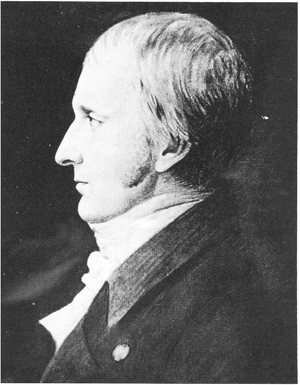
Thomas Wedgwood
Thomas Wedgwood (14 May 1771 – 10 July 1805), son of Josiah Wedgwood, the potter, is most widely known as an early experimenter in the field of photography.
He is the first person known to have thought of creating permanent pictures by capturing camera images on material coated with a light-sensitive chemical. His practical experiments yielded only shadow image photograms that were not light-fast, but his conceptual breakthrough and partial success have led some historians to call him "the first photographer".
Life
Thomas Wedgwood was conceived in Etruria, Staffordshire, now part of the city of Stoke-on-Trent in England.
Wedgwood was naturally introduced to a long queue of ceramics makers, grew up and was instructed at Etruria and was imparted from his childhood with an affection for workmanship. He additionally spent quite a bit of his short life partner with painters, artists, and writers, to whom he could be a benefactor after he acquired his dad's riches in 1795.
As a youthful grown-up, Wedgwood ended up intrigued by the best technique for instructing kids, and invested energy contemplating newborn children. From his perceptions, he reasoned that the greater part of the data that youthful brains assimilated got through the eyes, and were in this manner identified with light and pictures.
Wedgwood never wedded and had no kids. His biographer takes note of that "neither his surviving letters nor family convention let us know of his nurturing any lady outside the hover of his relations" and that he was "firmly pulled in" to melodic and touchy young fellows.
In flawed wellbeing as a kid and a constant invalid as a grown-up, he kicked the bucket in the province of Dorset at 34 years old.
A pioneer of photography
Wedgwood is the principal individual dependably reported to have utilized light-touchy chemicals to catch outline pictures on solid media, for example, paper, and the main known to have endeavored to photo the picture shaped in a camera obscura.
The date of his first tests in photography is obscure, however he is accepted to have by implication prompted James Watt (1736– 1819) on the down to earth points of interest preceding 1800. In a letter that has been differently dated to 1790, 1791 and 1799, Watt kept in touch with Josiah Wedgwood:
Dear Sir, I thank you for your guidelines with regards to the Silver Pictures, about which, when at home, I will make a few tests...
In his numerous tests, conceivably with exhortation on science from his mentor Alexander Chisholm and individuals from the Lunar Society, Wedgwood utilized paper and white cowhide covered with silver nitrate. The cowhide turned out to be all the more light-touchy. His essential target had been to catch certifiable scenes with a camera obscura, yet those endeavors were unsuccessful. He succeeded in utilizing presentation to guide daylight to catch outline pictures of items in contact with the treated surface, and additionally the shadow pictures cast by daylight going through works of art on glass. In the two cases, the sunlit zones quickly obscured while the regions in shadow did not.
Wedgwood met a youthful scientist named Humphry Davy (1778– 1829) at the Pneumatic Clinic in Bristol, while Wedgwood was there being dealt with for his infirmities. Davy reviewed his companion's work for production in London's Journal of the Royal Institution (1802), titling it "An Account of a Method of Copying Paintings upon Glass, and of Making Profiles, by the Agency of endless supply of Silver, with perceptions by Humphrey Davy. Imagined by T. Wedgwood, Esq." The paper was distributed and point by point Wedgwood's methods and achievements, and additionally Davy's own particular varieties of them. In 1802 the Royal Institution was not the revered power it is today and its Journal was:
a little paper printed every once in a while to tell the supporters of the baby establishment what was being done ...the 'Diary' did not live past a first volume. There is nothing to demonstrate that Davy's record was ever perused at any gathering; and its print would have been perused, clearly, if perused by any stretch of the imagination, just by the little hover of individuals and supporters of the foundation, of whom, we might be almost certain, exclusive a little minority can have been logical people.[4]
By and by, the paper of 1802 and Wedgwood's work specifically impacted different scientific experts and researchers diving into the specialty of photography, since resulting research (Batchen, p. 228) has demonstrated it was entirely generally thought about and was said in science course books as ahead of schedule as 1803. David Brewster, later a dear companion of photography pioneer Henry Fox Talbot, distributed a record of the paper in the Edinburgh Magazine (Dec 1802). The paper was converted into French, and furthermore imprinted in Germany in 1811.
Another pioneer, J. B. Reade's work in 1839 was specifically impacted by perusing of Wedgwood's more fast outcomes when utilizing cowhide. Reade took a stab at treating paper with a tanning operator utilized as a part of making calfskin and found that after sharpening the paper obscured all the more quickly when uncovered. Reade's revelation was imparted to Talbot by a companion, as was later demonstrated in a court case over licenses.
The record given by Reade of his examinations was completely review. His mehttp://newsnfact2.blogspot.in/2018/05/mark-zuckerberg-14-may.htmlmory was appeared to have been in mistake, made in 1840 and not 1839, drawn from memories he made in 1851, over ten years after.[5]
There are two extra guides significant toward Reade's incorrect claim: he was talking about the utilization of Gallic corrosive with silver nitrate. Silver nitrate isn't a halide and not at all like the chloride and fluoride of silver it has not the possibility to build up the idle picture. Likewise Reade neglected to comprehend or to make a refinement between tannic corrosive and gallic corrosive, alluding to either "tincture, mixture of, or a decoction of nerves" and gallic corrosive just as all were tradable. Any of these arrangements would contain minimal over 3% gallic corrosive, which is generally moderate acting. Tannic corrosive, then again, which constitutes in the vicinity of 60 and 79% is quick acting. The outcome being that it would promptly follow up on any gelatine present to render it insoluble; subsequently its utilization, since time immemorial, to tan cowhide which is a key material (ie.,for weld's boots, and outfit to connect firearms to weapon carriages and so forth). Talbot would have known about this gathering of natural mixes and there is prove that he had explored different avenues regarding gallic corrosive (2-3-4 tri-hydronitrobenzoic corrosive) since 1835 at the most recent. To begin with orchestrated via Carl William Scheele in 1786 whose reviews were broadly known (before, truth be told on the off chance that you reference his examinations with mystery writing).[6] Reade's pictures obscured rapidly on the grounds that the tannic corrosive segment of the"extract of nerves" has the ability to precipitously lessen silver nitrate to its metallic state.

.jpg)

Comments
Post a Comment